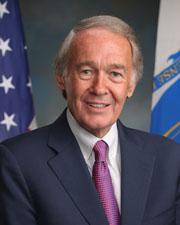
Congress Member Profile|U.S. Senator|Democrat|Massachusetts
Edward J. Markey
SoupScoreanalysis-first civic rating · view full breakdown
Loading…
Voting Record — 885
Yes26%
No73%
Present0%
Not Voting1%
Party align95%
Cross-party0%
SoupScore
District Map
Senate District (Statewide)
U.S. Census Bureau boundary data.
Social & Web
External Resources
Edward J. Markey
U.S. SenatorDemocratMassachusetts
SoupScore
Edward J.'s ATmosphere Activity
20 recent posts · 157 sponsored · 365 cosponsored
Recent ATmosphere posts, sponsorships, and cosponsorships.


When private equity treats hospitals like assets to strip instead of places to heal, patients like Chelsea Adolphus pay the price. We saw it with Steward here in MA. Congress must pass my Health Over Wealth Act now to rein in reckless private equity in healthcare.

61 years ago today, Medicare and Medicaid became law. In Massachusetts and across the country, they've meant the difference between care and catastrophe for millions of families. I am proud to keep fighting for both—today and always.

Across the country, kids are trying to learn in buildings with broken heat, leaky roofs, and hazardous ventilation systems. I’m proud to introduce the Green New Deal for Public Schools Act with @jayapal.house.gov to reinvest in our students, our planet, and our future.

The Trump administration approved the first private data center on public land using a permit meant for a solar project. Instead of building clean energy to lower utility bills, the President wants more data centers to make Big Tech rich using OUR land and resources. No way.
Trump appears poised to break the law again and send ICE and other armed federal agents to the polls this November to intimidate voters. We must protect our free and fair elections. Blanche, Mullin and Hegseth must answer my questions about election interference threats.

From record heat to noxious air from wildfires, people are paying for the climate crisis with their health. I am proud to introduce the Green New Deal for Health with @khanna.house.gov to build a healthcare system to withstand this crisis and to put patients and workers first.
Gas prices up, US troops lost, billions spent, and now this. Trump’s endless, unwinnable war has produced a new leader in Iran who is even worse than the old one. Just another reason why this war is a complete disaster. End the war now.

Instead of actually lowering your energy bills, Trump puts on a puppet show with his Big Tech donors to make them richer on your dime. My Ratepayer Roadmap offers a real solution: provide direct relief, build affordable clean energy, end profiteering from Big Tech and utilities.

The Trump administration said what has been clear for over a year: their slashing of federal funding is not about eliminating ‘waste, fraud, and abuse.’ It’s a crude attempt to punish their political opponents and harm our communities. It’s cruel, it’s illegal, and I won’t stop fighting it.

With the release of my AI Accountability Agenda, I am making a promise to families across America: I will fight to take back power from Big Tech and put it into the hands of the American people. AI must stand for Accountability and Inclusion, not Abuse and Injury.
My mother fought Alzheimer’s for thirteen years. I'm proud to lead the bipartisan reauthorization of the Alzheimer’s semipostal stamp, which has raised almost $2 million for Alzheimer’s research. Each letter sent with this stamp offers hope to families & gets us closer to a cure.
SoupScore Breakdown
Loading analysis metrics…
Voting History885 total votesExpandCollapse
Voting History
885 total votes
Recent roll calls with party-majority context so it is easier to scan how this member tends to vote.
| Date | Bill | Question | Position | Party Maj | Align? | Result |
|---|---|---|---|---|---|---|
| 2025-09-30 | H.R. 5371 (119th) | Final passage | NO | NO | ✓ | Bill Defeated (55-45, 3/5 majority required) |
| 2025-09-30 | S. 2882 (119th) | Final passage | YES | YES | ✓ | Bill Defeated (47-53, 3/5 majority required) |
| 2025-09-29 | S. 2806 (119th) | End filibuster to begin debate | NO | NO | ✓ | Cloture on the Motion to Proceed Rejected (37-61, 3/5 majority required) |
| 2025-09-29 | — | Confirm nominee | NO | NO | ✓ | Nomination Confirmed (54-45) |
| 2025-09-29 | — | End debate | NO | NO | ✓ | Cloture Motion Agreed to (54-45) |
| 2025-09-19 | — | Confirm nominee | NO | NO | ✓ | Nomination Confirmed (47-43) |
| 2025-09-19 | — | End debate | NO | NO | ✓ | Cloture Motion Agreed to (47-45) |
| 2025-09-19 | H.R. 5371 (119th) | Final passage | NO | NO | ✓ | Bill Defeated (44-48, 3/5 majority required) |
| 2025-09-19 | S. 2882 (119th) | Final passage | YES | YES | ✓ | Bill Defeated (47-45, 3/5 majority required) |
| 2025-09-18 | — | Confirm nominee | NO | NO | ✓ | Nomination Confirmed (51-47) |
| 2025-09-17 | — | End debate | NO | NO | ✓ | Cloture Motion Agreed to (52-47) |
| 2025-09-17 | — | Decision of the Chair PN12-19 and PN25-28 and PN12-45 and PN22-1 and PN22-2 and PN22-5 and PN22-27 and PN22-20 and PN22-21 and PN26-8 and PN26-34 and PN26-35 and PN55-41 and PN22-4 and PN22-8 and PN22-19 and PN26-1 and PN22-23 and PN25-40 and PN26-7 and PN26-19 and PN26-31 and PN60-3 and PN26-44 and PN25-2 and PN55-16 and PN60-9 and PN60-10 and PN129-8 and PN26-45 and PN141-37 and PN141-7 and PN141-28 and PN12-22 and PN25-21 and PN22-3 and PN26-22 and PN13-5 and PN22-24 and PN25-33 and PN141-18 and PN150-5 and PN345-16 and PN55-42 and PN54-6 and PN54-7 and PN55-45 and PN55-25 | YES | YES | ✓ | Decision of Chair Not Sustained (47-52) |
| 2025-09-17 | — | Motion to Reconsider PN55-25 and PN55-45 and PN54-7 and PN54-6 and PN55-42 and PN345-16 and PN150-5 and PN141-18 and PN25-33 and PN22-24 and PN13-5 and PN26-22 and PN22-3 and PN25-21 and PN12-22 and PN141-28 and PN141-7 and PN141-37 and PN26-45 and PN129-8 and PN60-10 and PN60-9 and PN55-16 and PN25-2 and PN26-44 and PN60-3 and PN26-31 and PN26-19 and PN26-7 and PN25-40 and PN22-23 and PN26-1 and PN22-19 and PN22-8 and PN22-4 and PN55-41 and PN26-35 and PN26-34 and PN26-8 and PN22-21 and PN22-20 and PN22-27 and PN22-5 and PN22-2 and PN22-1 and PN12-45 and PN12-19 and PN25-28 | NO | NO | ✓ | Motion to Reconsider Agreed to (51-47) |
| 2025-09-17 | — | End debate | NO | NO | ✓ | Cloture Motion Rejected (51-48, 3/5 majority required) |
| 2025-09-16 | S. Con. Res. 22 (119th) | Begin consideration | NO | NO | ✓ | Motion to Proceed Rejected (36-62) |
| 2025-09-16 | S.J. Res. 60 (119th) | Begin consideration | YES | YES | ✓ | Motion to Proceed Rejected (47-51) |
| 2025-09-15 | — | Confirm nominee | NO | NO | ✓ | Nomination Confirmed (48-47) |
| 2025-09-15 | — | End debate | NO | NO | ✓ | Cloture Motion Agreed to (50-44) |
| 2025-09-15 | S. Res. 377 (119th) | Approve resolution | NO | NO | ✓ | Resolution Agreed to (51-44) |
| 2025-09-11 | S. Res. 377 (119th) | End debate | NO | NO | ✓ | Cloture Motion Agreed to (53-43) |
| 2025-09-11 | S. Res. 377 (119th) | Decision of the Chair S.Res. 377 | YES | YES | ✓ | Decision of Chair Not Sustained (45-53) |
| 2025-09-11 | S. Res. 377 (119th) | Motion to Reconsider S.Res. 377 | NO | NO | ✓ | Motion to Reconsider Agreed to (52-45) |
| 2025-09-11 | S. Res. 377 (119th) | End debate | NO | NO | ✓ | Cloture Motion Rejected (52-47, 3/5 majority required) |
| 2025-09-10 | S. 2296 (119th) | Kill the motion | NO | NO | ✓ | Motion to Table Agreed to (51-49) |
| 2025-09-09 | S. Res. 377 (119th) | Begin consideration | NO | NO | ✓ | Motion to Proceed Agreed to (53-45) |
| 2025-09-09 | S. Res. 377 (119th) | Kill the motion | NO | NO | ✓ | Motion to Table Agreed to (53-46) |
| 2025-09-09 | — | Confirm nominee | NO | NO | ✓ | Nomination Confirmed (53-45) |
| 2025-09-09 | — | End debate | NO | NO | ✓ | Cloture Motion Agreed to (53-44) |
| 2025-09-09 | — | Confirm nominee | NO | NO | ✓ | Nomination Confirmed (49-46) |
| 2025-09-09 | — | End debate | NO | NO | ✓ | Cloture Motion Agreed to (51-46) |
| 2025-09-09 | — | Confirm nominee | NO | NO | ✓ | Nomination Confirmed (52-45) |
| 2025-09-08 | — | Confirm nominee | NO | NO | ✓ | Nomination Confirmed (50-43) |
| 2025-09-04 | S. 2296 (119th) | Begin consideration | NO | YES | ✕ | Motion to Proceed Agreed to (83-13) |
| 2025-09-04 | — | End debate | NO | NO | ✓ | Cloture Motion Agreed to (53-46) |
| 2025-09-04 | — | End debate | NO | NO | ✓ | Cloture Motion Agreed to (53-45) |
| 2025-09-02 | S. 2296 (119th) | End filibuster to begin debate | NO | YES | ✕ | Cloture on the Motion to Proceed Agreed to (84-14, 3/5 majority required) |
| 2025-08-02 | — | Confirm nominee | NO | NO | ✓ | Nomination Confirmed (71-23) |
| 2025-08-02 | — | Confirm nominee | NO | — | — | Nomination Confirmed (72-22) |
| 2025-08-02 | — | Confirm nominee | NO | NO | ✓ | Nomination Confirmed (59-35) |
| 2025-08-02 | — | Confirm nominee | NO | NO | ✓ | Nomination Confirmed (52-42) |
| 2025-08-02 | — | Confirm nominee | NO | NO | ✓ | Nomination Confirmed (50-45) |
| 2025-08-02 | — | Confirm nominee | NO | YES | ✕ | Nomination Confirmed (78-17) |
| 2025-08-02 | — | End debate | NO | YES | ✕ | Cloture Motion Agreed to (76-19) |
| 2025-08-02 | — | Confirm nominee | NO | NO | ✓ | Nomination Confirmed (50-45) |
| 2025-08-02 | — | End debate | NO | NO | ✓ | Cloture Motion Agreed to (51-45) |
| 2025-08-02 | — | Confirm nominee | NO | NO | ✓ | Nomination Confirmed (52-44) |
| 2025-08-02 | — | End debate | NO | NO | ✓ | Cloture Motion Agreed to (49-45) |
| 2025-08-02 | — | Confirm nominee | NO | NO | ✓ | Nomination Confirmed (49-44) |
| 2025-08-02 | — | End debate | NO | NO | ✓ | Cloture Motion Agreed to (51-45) |
| 2025-08-02 | — | Confirm nominee | NO | NO | ✓ | Nomination Confirmed (53-44) |
Alignment stats consider only votes where a clear yes/no majority existed for the legislator's party. Cross-party marks divergence where the vote matched the opposite party majority. ↔ indicates cross-party divergence.