
Prior to the Civil Rights Act, segregation was common across the U.S. Here in Maine, even celebrities like Duke Ellington weren’t welcome at some white-owned hotels.
So they had to find other accommodations—at places like the Jewell Inn in York or the Cummings Guest House in OOB. (2/8)
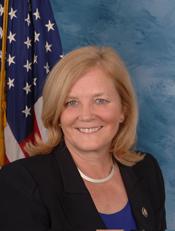
Congress Member Profile|U.S. Representative|Democrat|Maine District 1
Chellie Pingree
Source: Wikipedia • View full (CC BY-SA)
SoupScoreanalysis-first civic rating · view full breakdown
Loading…
Voting Record — 581
Yes41%
No54%
Present1%
Not Voting5%
Party align98%
Cross-party1%
SoupScore
District Map
Congressional District 1
U.S. Census Bureau boundary data.
Social & Web
External Resources
Chellie Pingree
U.S. RepresentativeDemocratMaine District 1
SoupScore
Chellie's ATmosphere Activity
20 recent posts · 22 sponsored · 163 cosponsored
Recent ATmosphere posts, sponsorships, and cosponsorships.
From our amazing beaches to our charming towns, there’s a reason Maine is known as “Vacationland.”
Sadly, our state wasn’t always welcoming to everyone. That’s what makes this story—about Black Mainers who ensured our state was open to all—so inspiring. (1/8)
www.pressherald.com/2025/02/15/f...

Republicans passed their Big Ugly Bill and then cancelled an entire week of session.
I’ll be back in D.C. on Monday, fighting their deep cuts to education, the environment, and public broadcasting —and defending the programs Maine counts on.
In fact, analysis from the Yale Budget Lab finds that once tax cuts are offset against program cuts, the bottom 40% of Americans are worse off, on average.
Funny how “everyone” somehow always means the top 1%.
Put another way: ~80% of Maine households will see *less* than $1,500 a year in tax breaks.
Meanwhile, health care, energy, and grocery costs are expected to rise under this bill—eating up those so-called “savings” and then some.
Republicans say the tax breaks in their Big Ugly Bill will benefit everyone. But here’s what @mecep.bsky.social data actually shows:
The top 1% of Maine households (those making $817,400+) will get an average tax cut of $34,000 in 2026.
And the poorest Mainers? $30 a year.
Thirty. Dollars.

The Constitution unequivocally gives Congress the power to decide how our federal bureaucracy is funded.
SCOTUS cannot abdicate its duty here.
Once again, SCOTUS punted on a crucial constitutional question, allowing the Administration to continue firing federal employees at will.
Since January, dozens of federal workers in Maine have been fired without cause—and with no advanced notice.
More mass layoffs could be on the way.

*Republicans, obviously.
So the next time you hear a Republican argue that cutting Medicaid by a trillion dollars is just “sound fiscal policy,” show them the numbers.
The only “waste, fraud, and abuse” I see is this monstrosity of a bill. (13/13)
Between the mounting costs to consumers and the major potential loss of jobs in the health care sector, the broader economic impact will be massive.
According to multiple studies, every $1 in Medicaid spending generates $2 to $3 in economic activity.
Republican's just don't get it. (12/13)
When uninsured people need emergency care, they’re probably going to go to the nearest ER. That means the provider has to foot the bill.
But those costs eventually get passed down—mostly to privately insured patients (i.e. a majority of Americans), who are forced to pay higher premiums. (11/13)
Here in Maine, we've already seen one rural hospital close this year (Northern Light Inland Hospital in Waterville). Others are barely hanging on—and bracing for the worst.
The broader impacts on our health care system will be huge. (10/13)
Then there’s the impact on rural hospitals + community health centers—most of which rely heavily on Medicaid reimbursements.
More uninsured people means more unpaid bills, more financial strain, and a greater risk that the only clinic or hospital for miles will be forced to close its doors. (9/13)
This is *exactly* what Republicans are trying to do on a national scale: Make the process so complicated and burdensome that people just give up and drop out.
That’s their actual plan for weeding out “waste, fraud, and abuse.” (8/13)
Today, fewer than 7,500 Georgians are enrolled in the so-called “Pathways” program, out of ~345,000 who qualify.
That’s a 3% participation rate.
All because of ridiculous paperwork requirements that almost no one can follow—and a whole lot of digital inequity. (7/13)
Back in 2023, Georgia tried implementing the nation’s first-ever work requirement for Medicaid.
You know what happened? People either found the process too onerous, couldn’t access the online portal (because they didn’t have internet), or were kicked off due to paperwork errors. (6/13)
Take the “work requirement” included in the BBBA. This might sound sensible on its face, but there’s virtually no explanation for what it would look like.
Do you have to provide pay stubs? W2s? A signed letter from your employer? All of the above? Nobody knows! (5/13)
Those who don’t? They’re:
🟢 People in low-wage or part-time jobs
🟢 Parents caring for children with disabilities
🟢 People with disabilities or chronic conditions
🟢 Older adults who can’t rely on Medicare alone
Many could have their health care taken away, thanks to a maze of red tape. (4/13)
In fact, a 2023 GAO report estimated that fraud by beneficiaries accounts for <1% of all improper Medicaid payments.
(Side note: the Speaker's claim that 1.4 million undocumented immigrants are on federally funded Medicaid? Totally false.)
Most adults on Medicaid who can work, *do* work! (3/13)
SoupScore Breakdown
Loading analysis metrics…
Voting History581 total votesExpandCollapse
Voting History
581 total votes
Recent roll calls with party-majority context so it is easier to scan how this member tends to vote.
| Date | Bill | Question | Position | Party Maj | Align? | Result |
|---|---|---|---|---|---|---|
| 2026-06-11 | H. Res. 1335 (119th) | Approve resolution | NO | NO | ✓ | Passed |
| 2026-06-11 | H.R. 9238 (119th) | Fast-track passage | NO | NO | ✓ | Failed |
| 2026-06-10 | H.R. 8464 (119th) | Final passage | NO | NO | ✓ | Passed |
| 2026-06-10 | H.R. 8464 (119th) | Send back to committee | YES | YES | ✓ | Failed |
| 2026-06-10 | H.R. 8312 (119th) | Final passage | NO | NO | ✓ | Passed |
| 2026-06-10 | H.R. 7892 (119th) | Final passage | NO | NO | ✓ | Passed |
| 2026-06-09 | H.R. 5408 (119th) | Final passage | YES | YES | ✓ | Passed |
| 2026-06-09 | H. Res. 1140 (119th) | Approve resolution | YES | YES | ✓ | Passed |
| 2026-06-09 | S. 2 (119th) | Final passage | NO | NO | ✓ | Passed |
| 2026-06-09 | S. 2 (119th) | Motion to Commit | YES | YES | ✓ | Failed |
| 2026-06-09 | H. Res. 1140 (119th) | Motion to Discharge | YES | YES | ✓ | Passed |
| 2026-06-09 | H. Res. 1345 (119th) | Approve resolution | NO | NO | ✓ | Passed |
| 2026-06-09 | H. Res. 1345 (119th) | End debate now | NO | NO | ✓ | Passed |
| 2026-06-08 | H.R. 8428 (119th) | Fast-track passage | YES | YES | ✓ | Passed |
| 2026-06-08 | H.R. 8466 (119th) | Fast-track passage | YES | YES | ✓ | Passed |
| 2026-06-05 | H.R. 2913 (119th) | Final passage | YES | YES | ✓ | Passed |
| 2026-06-04 | H. Res. 518 (119th) | Approve resolution | YES | YES | ✓ | Passed |
| 2026-06-04 | H.R. 8646 (119th) | Final passage | NO | NO | ✓ | Passed |
| 2026-06-04 | H.R. 8646 (119th) | Send back to committee | YES | YES | ✓ | Failed |
| 2026-06-04 | H. Res. 1336 (119th) | Approve resolution | NO | NO | ✓ | Passed |
| 2026-06-04 | H. Res. 1336 (119th) | End debate now | NO | NO | ✓ | Passed |
| 2026-06-04 | H. Con. Res. 84 (119th) | Approve resolution | YES | NO | ✕ | Failed |
| 2026-06-03 | H. Res. 518 (119th) | Motion to Discharge | YES | YES | ✓ | Passed |
| 2026-06-03 | H. Con. Res. 86 (119th) | Approve resolution | YES | YES | ✓ | Passed |
| 2026-06-03 | H.R. 7726 (119th) | Final passage | NO | NO | ✓ | Passed |
| 2026-06-03 | H.R. 7726 (119th) | Send back to committee | YES | YES | ✓ | Failed |
| 2026-06-03 | H.R. 2860 (119th) | Fast-track passage | YES | YES | ✓ | Passed |
| 2026-06-03 | H. Res. 1333 (119th) | Approve resolution | NO | NO | ✓ | Passed |
| 2026-06-03 | H. Res. 1333 (119th) | End debate now | NO | NO | ✓ | Passed |
| 2026-06-03 | S. 254 (119th) | Fast-track passage | YES | YES | ✓ | Passed |
| 2026-06-03 | H.R. 7618 (119th) | Fast-track passage | YES | YES | ✓ | Passed |
| 2026-05-21 | H.R. 6047 (119th) | Final passage | NO | NO | ✓ | Passed |
| 2026-05-21 | H.R. 1041 (119th) | Final passage | NO | NO | ✓ | Passed |
| 2026-05-21 | H.R. 1041 (119th) | Send back to committee | YES | YES | ✓ | Failed |
| 2026-05-21 | H.R. 1329 (119th) | Final passage | NO | NO | ✓ | Failed |
| 2026-05-21 | H.R. 1329 (119th) | Send back to committee | YES | YES | ✓ | Failed |
| 2026-05-20 | H. Res. 1300 (119th) | Approve resolution | NO | NO | ✓ | Passed |
| 2026-05-20 | H. Res. 1300 (119th) | End debate now | NO | NO | ✓ | Passed |
| 2026-05-20 | H.R. 2616 (119th) | Final passage | NO | NO | ✓ | Passed |
| 2026-05-20 | H.R. 2616 (119th) | Send back to committee | YES | YES | ✓ | Failed |
| 2026-05-20 | H.R. 1993 (119th) | Fast-track passage | YES | YES | ✓ | Passed |
| 2026-05-20 | S. 1003 (119th) | Fast-track passage | YES | YES | ✓ | Passed |
| 2026-05-20 | S. 2393 (119th) | Fast-track passage | YES | YES | ✓ | Passed |
| 2026-05-20 | H.R. 5317 (119th) | Fast-track passage | YES | YES | ✓ | Passed |
| 2026-05-20 | H.R. 4544 (119th) | Fast-track passage | YES | YES | ✓ | Passed |
| 2026-05-20 | H.R. 3234 (119th) | Fast-track passage | YES | YES | ✓ | Passed |
| 2026-05-20 | H. Res. 1299 (119th) | Motion to Suspend the Rules and Agree | YES | YES | ✓ | Passed |
| 2026-05-15 | H.R. 8469 (119th) | Final passage | YES | YES | ✓ | Passed |
| 2026-05-15 | H.R. 8469 (119th) | Approve amendment | NO | NO | ✓ | Failed |
| 2026-05-14 | H.R. 8365 (119th) | Final passage | NO | NO | ✓ | Passed |
Alignment stats consider only votes where a clear yes/no majority existed for the legislator's party. Cross-party marks divergence where the vote matched the opposite party majority. ↔ indicates cross-party divergence.
Page 1 / 12Next →